

Uncategorized
Creating a Welcoming Ambiance: The Lobby Supplies That Shape Every First Impression
Aug
A guest forms an opinion of your property long before they reach the front desk. They notice whether a bellman arrives with a trolley or whether they are left dragging four suitcases across polished stone. They notice whether the lounge seating looks freshly dressed or slightly tired. And in Singapore, they notice very quickly whether there is somewhere sensible to put a dripping umbrella.
The lobby is the only space every guest passes through, usually several times a day. It is also where equipment and soft furnishings work hardest and wear fastest. This article focuses on the front-of-house supplies that carry the most weight in a hotel lobby: premium luggage trolleys, lounge linens, umbrella management and sign stands. For each one, we look at what to specify so the piece still looks right in its third year of service, not just its first week.
Why the Lobby Carries More Weight Than Any Other Space
Lobby ambiance is not created by the architecture alone. It is created by the equipment and textiles that sit inside it, and by how well maintained they look on an ordinary Tuesday afternoon.
First Impressions Are Formed in Well Under a Minute
Arrival is the highest-stakes moment of the guest journey. A scratched trolley deck, a creased runner on the console table or a curling paper sign propped against a planter all register, even when nobody consciously comments on them. The reverse is equally true: a trolley with a clean carpeted deck and quiet castors, crisp lounge linen and a properly weighted sign stand tell the guest the property pays attention, and that impression carries into how they read the guest room and the service.
Front-of-House Equipment Is Part of the Design Scheme
Luggage trolleys, umbrella stands and sign stands are too often specified last, by a different team, from a different budget line. Treat them the way you treat contract hotel furniture instead. Finish, colour and material should be selected against the same palette as the joinery and seating. Most reputable hospitality furniture suppliers can supply trolleys in anodised gold, satin brass, brushed stainless or powder-coated finishes, with deck carpet chosen to complement the lobby flooring.
The Busiest Room Deserves the Highest Specification
A 250-room hotel can put several hundred luggage movements a day through the same three or four trolleys. Lightly built equipment fails visibly under that load, with wobbling castors, torn deck carpet and bent uprights. Commercial specification is not an upgrade in this room, it is the baseline, and the cost of replacing a cheap trolley twice exceeds the cost of buying the right one at the start.
Premium Luggage Trolleys: The First Piece of Equipment a Guest Sees Working
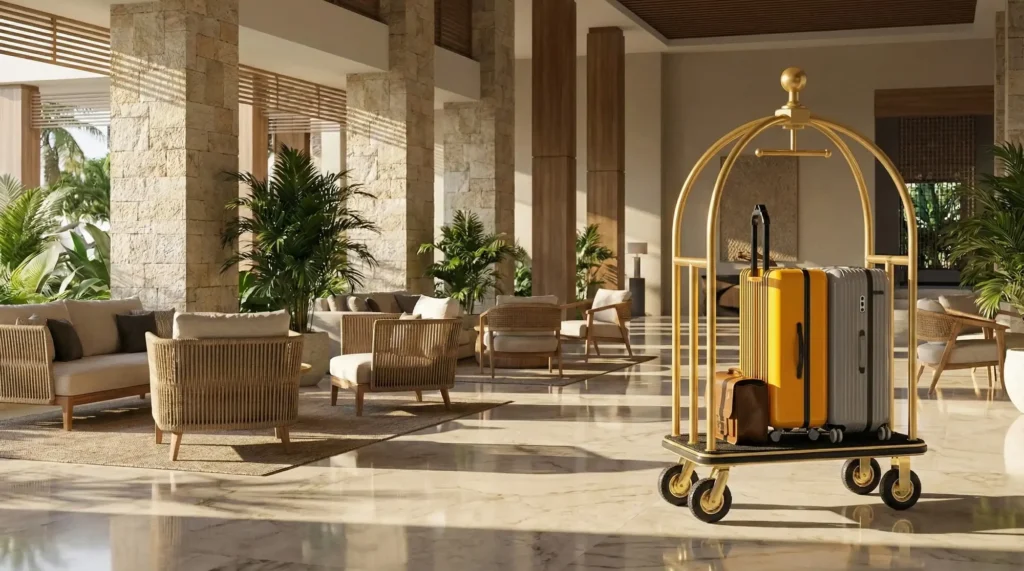
The luggage trolley is the most public piece of operating equipment in the building. It is used in front of the guest, at the moment of arrival and again at departure, and it is often photographed by accident in the background of every lobby image on social media.
European manufacturers have pushed this category a long way beyond the basic tubular bellman cart. Ascolia, one of the brands in The Hotel Resource collection, builds front-of-house and housekeeping trolleys around ergonomics and finish quality, including motorised options for properties with long corridors, ramps or basement arrival routes.
What Separates a Premium Trolley From a Budget One
- Frame and finish. Anodised aluminium and coated steel resist the chipping and pitting that make older trolleys look dated. Gold anodised and natural anodised aluminium remain the two most specified finishes in luxury lobbies because they hold their appearance without constant polishing.
- Removable, washable deck carpet. This is the single detail most often overlooked. Deck carpet takes the wear from wet suitcase wheels and airport grime. If it cannot be removed and laundered, the trolley looks worn within a year.
- Castor quality and noise. Non-marking, precision castors keep the trolley quiet across marble and protect the floor finish. A rumbling trolley crossing a quiet lobby at 6am is a genuine guest complaint in properties with lobby-adjacent rooms.
- Load capacity and balance. Check both the rated load and the behaviour when loading is uneven, which is how trolleys are actually used. Wide wheelbases and low decks reduce tipping risk.
- Powered assistance. Electric-assist models reduce strain for smaller-framed team members and make ramps and long transfers manageable. They pay for themselves in properties with high arrival volumes or awkward back-of-house routes.
- Bumper protection. Continuous rubber bumpers protect lift doors, corridor corners and the trolley itself. Repainting lift lobbies every year is a hidden cost of unprotected equipment.
Matching the Trolley to Your Property
- Measure the narrowest point on the arrival route, usually the lift door or a service corridor turn, before selecting deck length.
- Count peak simultaneous arrivals, not average daily arrivals. Group and tour business changes the trolley count entirely.
- Specify one spare beyond your calculated need so a damaged unit can be taken out of service without affecting arrivals.
You can view the current trolley and cart range, including room attendant and room service models from the same manufacturers, on The Hotel Resource Trolleys and Carts category page.
Lobby Lounge Linens: The Detail That Signals Daily Care
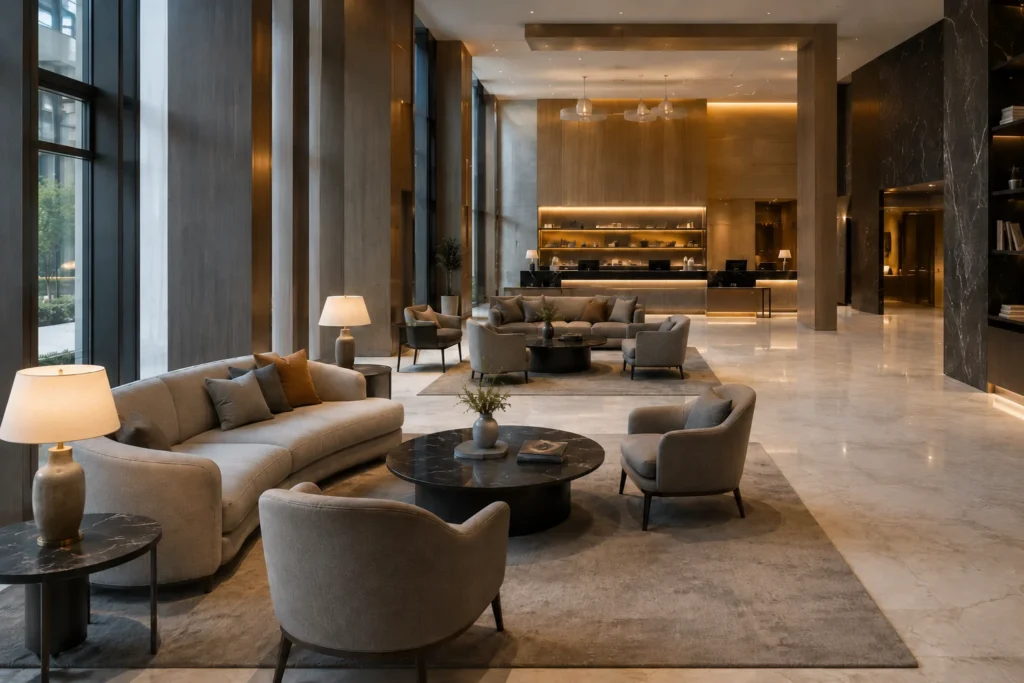
Soft furnishings are what make a lobby feel dressed rather than merely furnished. In lounge and reception zones, textiles do three jobs at once: they protect surfaces, they add warmth against hard architectural finishes, and they give you a low-cost way to refresh the space seasonally without touching the furniture.
Regalle Premium and Schwob, both carried by The Hotel Resource, cover the range most properties need here, from custom table linen and runners through to skirting for reception counters and event registration desks.
What to Dress in a Lobby Lounge
- Console and occasional tables. Runners and fitted covers protect timber and stone tops from condensation rings and welcome-drink spills.
- Coffee and cocktail tables in lounge zones. Lightweight overlays let you shift the mood between day and evening service.
- Reception and registration counters. Fitted skirting turns a temporary trestle into a finished check-in point during peak arrival periods or group check-ins.
- Lounge seating. Throws, seat pads and fitted covers extend upholstery life and let you correct a colour scheme without reupholstering.
Specifying Linen That Survives the Laundry
The failure point for hospitality textiles is almost never day one appearance. It is what the fabric looks like after fifty industrial wash cycles. Ask suppliers for commercial laundering guidance, shrinkage tolerance and colour-fastness data before committing to a custom colour.
- Hold a minimum of three pars for anything in daily rotation: one in use, one in the laundry, one on the shelf.
- Favour stain-release finishes and mid-tone colours in high-traffic lounges. Pure white shows every coffee ring and drives up replacement rates.
- Keep the lobby palette documented alongside your restaurant and banquet linen so replacements stay consistent across departments.
The current fabrics and linens range is listed under Hospitality Fabrics and Linens. Cuom sizing and branding are available through the in-house Regalle Premium line.
Umbrellas and Umbrella Management for a Tropical Climate
Singapore averages rain on more than 170 days a year. Every one of those days sends wet guests, wet umbrellas and wet floors into your lobby. How a property handles that is a genuine service differentiator and a safety issue at the same time.
Guest Loan Umbrellas
A rack of branded, full-size umbrellas at the concierge desk is one of the highest-value, lowest-cost amenities in hospitality. It is used, it is remembered, and it is mentioned in reviews.
- Specify wind-resistant frames with fibreglass ribs. Cheap umbrellas invert on the first squall and become a negative brand impression.
- Choose full-size canopies for guest loan and compact folding models for in-room placement.
- Plan for loss. Build an annual replacement percentage into the budget rather than treating shrinkage as an exception.
Stands, Bag Stations and Floor Safety
- Drip-tray umbrella stands. Position at every entrance. Stainless or powder-coated stands with removable drip trays contain water instead of spreading it.
- Umbrella bag or wrapper stations. Wet-umbrella wrappers keep water out of lifts and corridors entirely. They are the more hygienic option in properties with carpeted lift lobbies.
- Matting and slip management. Pair umbrella stations with entrance matting rated for water retention. Polished stone plus rainwater is the most common slip-and-fall exposure in a hotel lobby.
- Finish matching. Specify stands in the same metal finish as your luggage trolleys and sign stands so the entrance reads as one coordinated set.
Sign Stands and Wayfinding That Look Deliberate
Signage is the fastest way to make a considered lobby look improvised. A printed A4 sheet taped to a lift door, or a plastic A-frame borrowed from the loading bay, undoes a great deal of design investment.
Proper sign stands solve this. They also do real operational work in a property that runs conferences and banquets, where guests need to find the right function room without asking.
What to Specify
- Poster and sign stands. Brushed or polished stainless frames in standard A1 and A2 sizes cover most needs. Weighted bases prevent the toppling that plastic stands are prone to in air-conditioned draughts.
- Interchangeable inserts. Snap frames and slide-in inserts let the team change messaging in seconds without tools, which is what actually determines whether signage stays current.
- Queue posts and retractable belt barriers. Essential for group check-in and large events. Specify the belt colour deliberately rather than defaulting to black.
- Storage. Sign stands live in the lobby only when in use. Confirm they stack or fold and that there is a designated store, or they will end up behind the concierge desk.
A Quick Reference for Lobby Supply Specification
| Lobby supply | What it solves | What to specify | Common failure point |
| Premium luggage trolley | Arrival experience, staff strain, luggage volume at peak | Anodised or coated frame, removable washable deck carpet, non-marking castors, bumper rail, powered option for long routes | Deck carpet wear and noisy castors on stone floors |
| Lobby lounge linens | Surface protection, warmth, seasonal refresh | Commercial laundering data, stain-release finish, three-par minimum, repeatable custom sizes | Colour fade and shrinkage after repeated industrial washing |
| Guest loan umbrellas | Guest comfort in wet weather, service perception | Wind-resistant fibreglass ribs, full-size canopy, discreet branding, annual replacement allowance | Frame inversion and unplanned shrinkage |
| Umbrella stands and bag stations | Floor safety, water containment | Removable drip trays, finish matched to trolleys, entrance matting alongside | Water tracked into lifts and carpeted corridors |
| Sign stands and wayfinding | Guest navigation, event professionalism | Weighted stainless bases, snap or slide inserts, matched family across lobby and pre-function areas | Ad hoc printed signage replacing the stand |
Specifying for Singapore Conditions
Persistent humidity is hard on untreated metal and on any textile that does not dry quickly. Specify coated or anodised finishes rather than bare steel, confirm castors and fixings are corrosion resistant, and check that stands and racks drain rather than pool.
Then decide your front-of-house metal finish once and apply it to trolleys, umbrella stands, sign stands, luggage racks and bell desk fittings. This single decision does more for perceived quality than almost any individual product upgrade, and it costs nothing extra if it is made before you buy hospitality furniture and equipment rather than after.
Finally, allocate storage during design rather than after handover. Lobby supplies only look good if there is a place to put them when they are not in use, and the same applies to hotel housekeeping supplies in Singapore properties, where cleaning equipment left in view during service hours quietly undermines the space.
Sourcing from a Singapore Hospitality Supplier
Buying lobby supplies locally shortens lead times, simplifies warranty support and puts someone on the ground when a trolley castor fails during a peak arrival week. It also gives you continuity across categories: the same partner supplying your lobby trolleys and lounge linens can supply guest room bed linens, and can act as your banquet tables and chairs supplier when function space is refurbished, so a reorder in year three still matches what you bought in year one. You can see how that plays out across live properties on the Projects page.

Conclusion
A welcoming lobby is the sum of a small number of items used constantly and seen by everyone. A premium luggage trolley that moves quietly and looks current. Lounge linens that hold their colour past the fiftieth wash. Umbrellas and stands that handle a tropical downpour without turning marble into a hazard. Sign stands that make event guests feel expected rather than lost.
At The Hotel Resource, we supply front-of-house equipment and textiles from Ascolia, Elite, Regalle Premium, Schwob and other hospitality brands, with the specification support to match finishes across your property. Get in touch to review your lobby supply list, or browse the full product range to see what is available.
FAQ
Q1: How many luggage trolleys does a hotel actually need?
A: Size against peak simultaneous arrivals rather than room count. Properties taking group or tour business need noticeably more than transient-only hotels of the same size. Add one spare unit so a damaged trolley can be withdrawn from service without affecting arrivals.
Q2: Are premium lobby supplies worth the cost for a mid-scale property?
A: Yes, because the lobby is the highest-visibility, highest-traffic space in the building. Premium here does not mean the most expensive option. It means commercial specification, serviceable parts and finishes that stay presentable, which is where the cost savings appear over a five-year horizon.
Q3: How often should lobby lounge linens be replaced?
A: It depends on wash frequency rather than calendar age. Items in daily rotation typically need replacing every 12 to 24 months. Holding a three-par rotation and choosing stain-release fabrics extends that considerably. Review the full set once a year and replace by set rather than by piece so the palette stays consistent.
